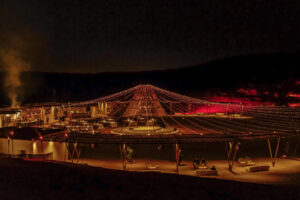
How Sound and Music Shape a Desert Evening in Dubai
One of the things people often assume about the desert is that it is silent.
It isn’t. Well, not really.
Spend enough evenings there and you begin to notice that the desert always has its own sound before anything else is added to it. Wind moving through open space. The sand under your feet. The occasional stillness that somehow feels louder than noise.
That matters more than most people realise.
Because when music is introduced into the desert, it is never moves into the silence. It is moves into an environment that already has its own rhythm.
Across Nara experiences, this understanding shapes the entire evening.
Music is not treated as entertainment layered on top of the experience. It is treated as part of how the night moves. Part of how energy rises, softens, shifts, and settles.
When done well, guests rarely leave remembering a specific song.
What they remember is how the evening felt.
Before the Music, There Is Already Sound
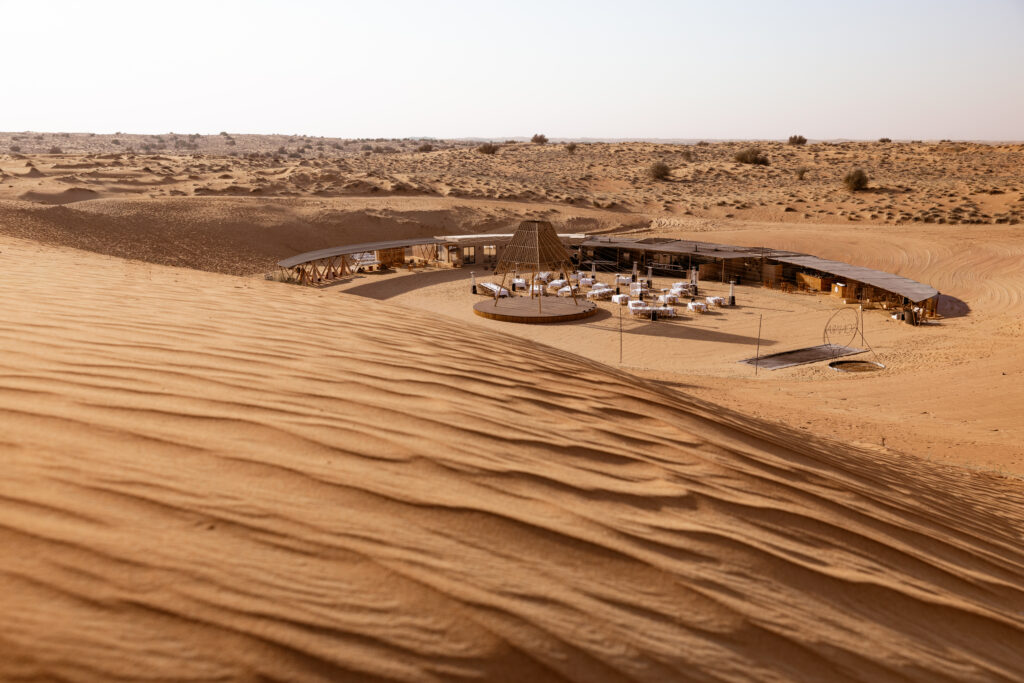
What becomes obvious over time is that the desert is never truly quiet.
There is always movement in it.
Wind.
Distance.
The space itself.
Even when nothing is happening, the desert carries presence.
In a city, sound competes with everything around it. In the desert, it sits against something far more open.
Which means even the smallest note feels more deliberate.
It also means restraint matters.
Too much sound too early, and the environment disappears beneath it.
Too little, and the evening risks feeling flat.
The balance is finer than many expect.
Music Should Never Arrive Before the Setting Does
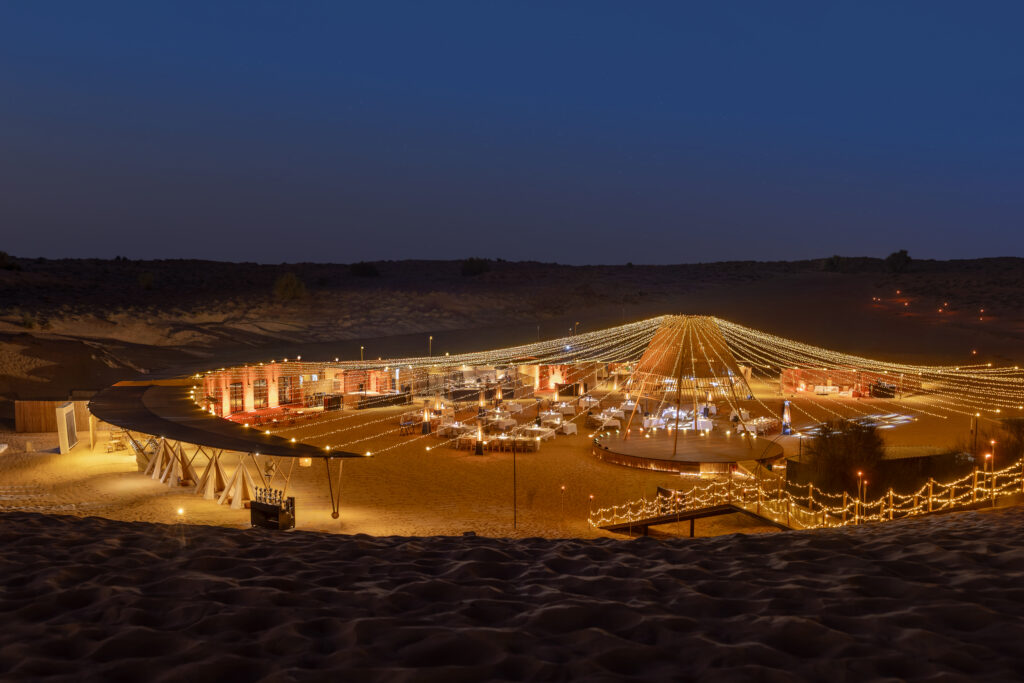
At Sonara Camp, music is present from the beginning, but never in a way that announces itself.
It sits behind the experience at first.
Low enough that conversation still leads.
Subtle enough that guests notice the setting before they notice the soundtrack.
That is intentional.
Arrival should belong to the desert first.
The light. The landscape. The space.
Music enters to support that, not compete with it.
If the soundtrack becomes the first thing guests register, it is usually doing too much.
The Evening Is Built Around Shifts in Energy
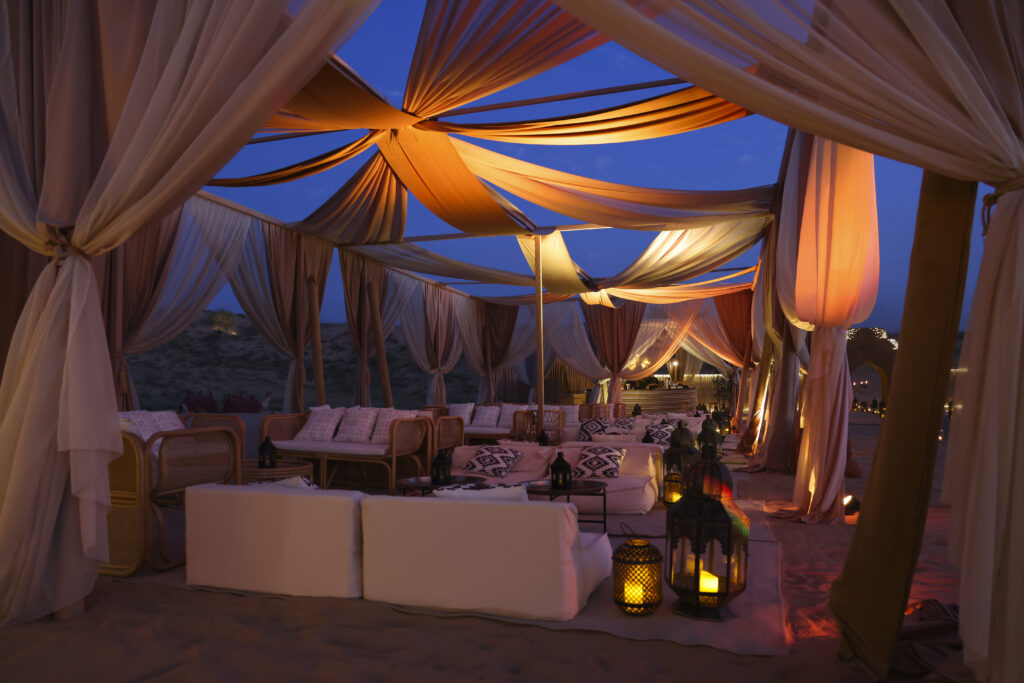
A strong desert evening should never feel emotionally flat.
Nor should it remain at one level of intensity throughout.
At Sonara Camp, the soundscape changes with the progression of the night.
Earlier moments remain lighter, more ambient, more spacious.
As dinner settles and the evening deepens, the energy gradually builds.
Not abruptly.
Not theatrically.
Just enough that guests feel the pace changing before they consciously notice why.
That progression is part of what gives the evening momentum.
Without it, even the most beautiful setting risks feeling static, or worse.. flat.
Performance Changes Everything
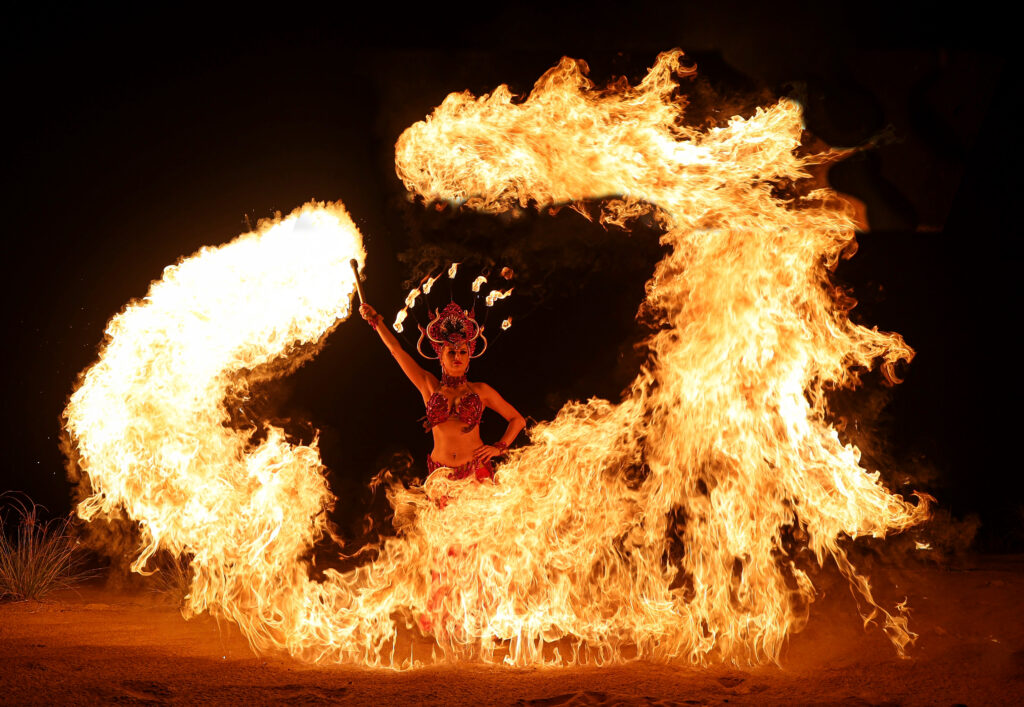
There comes a point in the evening when music shifts from atmosphere to centre stage. That moment arrives with performance. Every night.
The soundtrack changes first.
The tempo sharpens. The rhythm becomes more deliberate. The music begins to lead rather than support.
It is this shift in sound, more than anything else, that signals the evening has entered a different phase.
By the time the performance begins, the music is no longer simply part of the background. It is shaping anticipation, directing focus, and controlling the pace of the moment.
At Sonara, the performance soundtrack is selected with that in mind.
Each track is chosen not simply to accompany what guests are watching, but to heighten how the performance is felt.
Because when the right music meets the right moment in the desert, the atmosphere changes instantly.
In the Desert, Sound Has to Be Designed Differently

Open desert changes how sound behaves.
There are no walls to contain it.
No ceilings to soften it.
No architecture to shape it.
Everything carries differently.
Which means sound in the desert cannot be approached the way it would be indoors.
At Nara, music, performance, and sound levels are adjusted constantly depending on weather, wind, spacing, and where guests are within the environment.
Because what works in one moment may feel entirely wrong ten minutes later.
When guests say an evening felt seamless, this is often part of what they are responding to without realising it.
The Night Should Know How to Come Back Down

One of the most overlooked parts of pacing is what happens after the peak.
Too many experiences build toward a climax and then end abruptly.
The stronger approach is to let the evening descend gradually.
Once a performance ends, the energy softens again.
Music lowers. Conversation returns. Guests settle back into the space.
The night continues, but differently than before.
That comedown matters.
Without it, the evening feels cut short.
With it, the entire experience feels more complete.
What Guests Remember Is Rarely the Music Itself
Very few guests leave talking about specific songs.
They talk about the atmosphere.
The feeling when the performance began.
The way the energy shifted.
The moment the fire started.
The sense that the night kept changing without ever feeling forced.
That is the role music should play in an experience like this.
Not to dominate. Not to announce itself. Simply to help shape the way the evening moves.
At its best, music disappears into memory not because it was unnoticed, but because it was felt rather than observed.
Frequently Asked Questions
What kind of music is played during a desert dinner experience in Dubai?
Music typically shifts throughout the evening. Earlier moments tend to feature more ambient, understated sound, while later stages may introduce more immersive music tied to performance or energy shifts within the night.
Is the music live during desert experiences like Sonara?
Music and performance elements are introduced during key moments of the evening at Sonara Camp, with sound used to support the wider progression of the experience. Depending on the moment, this may include live performance, curated soundtrack, or a combination of both.
Do desert camps in Dubai play traditional or Arabic music?
Some experiences incorporate traditional or regional influences, while others take a more contemporary approach depending on the concept and atmosphere being created.
Is the desert dinner experience loud or more relaxed?
It moves between both. Earlier parts of the evening tend to remain more relaxed, while performance-led moments introduce greater energy and intensity before the atmosphere softens again.
Does music define the desert experience?
Not on its own. The strongest desert experiences are shaped by a combination of setting, pace, atmosphere, and sound. Music enhances the experience, but should never overpower the environment itself.